
Blog
German vs American Cockroaches in the UAE: How to Tell Them Apart

Not all cockroaches are the same — and in the UAE, the German vs American cockroaches question changes everything about the treatment. The two species you will meet are the German cockroach and the American cockroach. One is a small kitchen invader; the other is a large outdoor intruder. Here is how to tell them apart and why it matters.
Misidentification is one of the most common reasons DIY cockroach treatments fail. The bait that wipes out a German cockroach colony may barely dent an American cockroach problem, because the two species live differently, breed differently and enter your home through different routes.
German cockroach: the kitchen invader
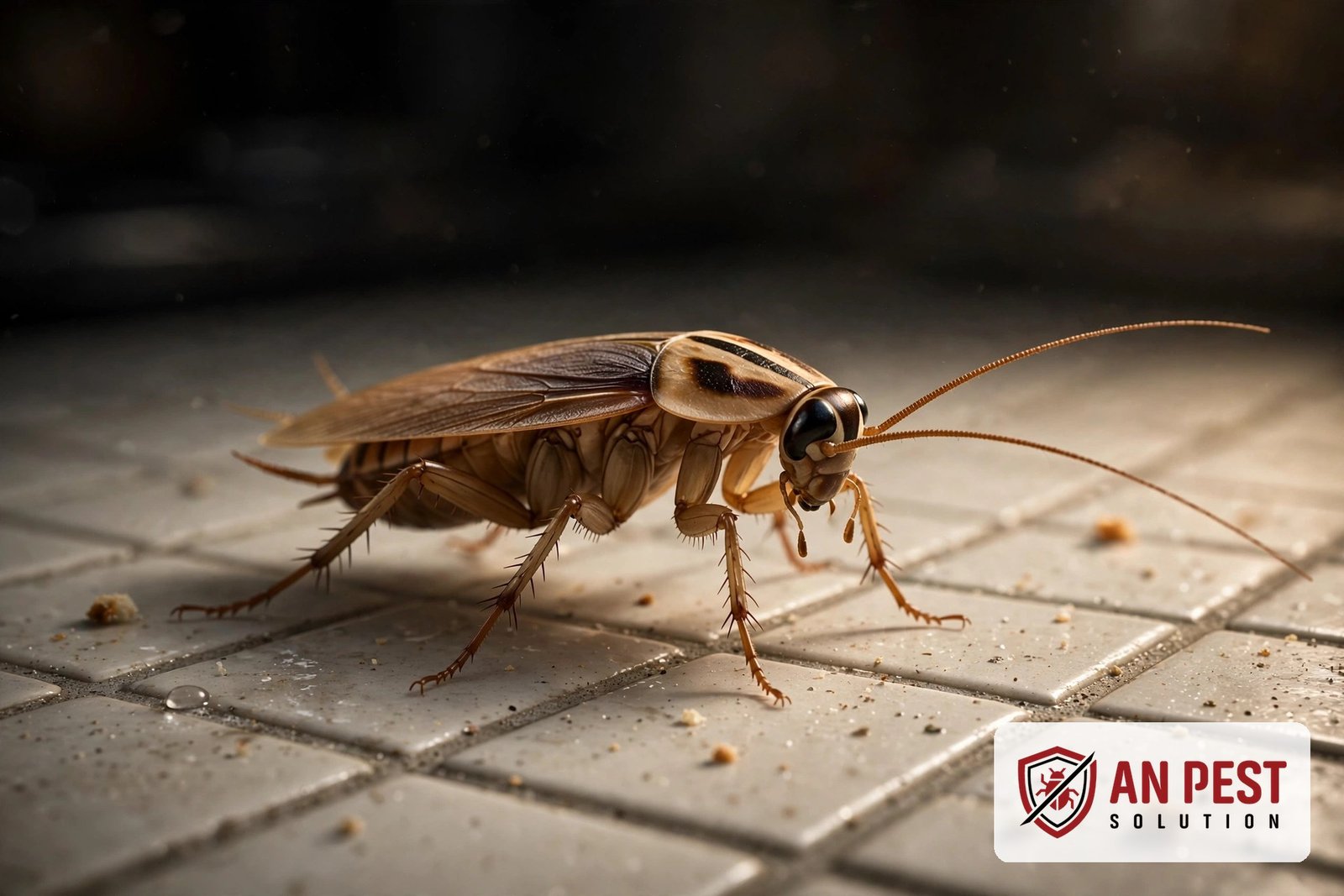
The German cockroach (Blattella germanica) is the species behind most indoor infestations in the UAE. Adults are small — just 13–16mm long — light brown with two dark parallel stripes running down their backs. Despite having wings, they rarely fly, preferring to run.
German cockroaches live indoors, close to food and moisture. Kitchens are their stronghold: behind refrigerators, inside cupboard hinges, under sinks, around dishwashers and inside electrical appliances. A single egg case holds 30–40 eggs, and populations explode in weeks — which is why a few sightings can become hundreds before you realize.
Signs of German cockroaches include tiny black droppings resembling ground pepper, a musty oily odor in cupboards, shed skins, and the egg cases themselves — small brown capsules tucked into crevices.
German cockroaches do not bite, but they contaminate everything they cross. They carry Salmonella, E. coli and allergens linked to asthma — a serious concern in homes with children. Because they travel between rubbish and food preparation surfaces, a German cockroach infestation is a genuine food safety issue, not just a nuisance.
American cockroach: the big outdoor one
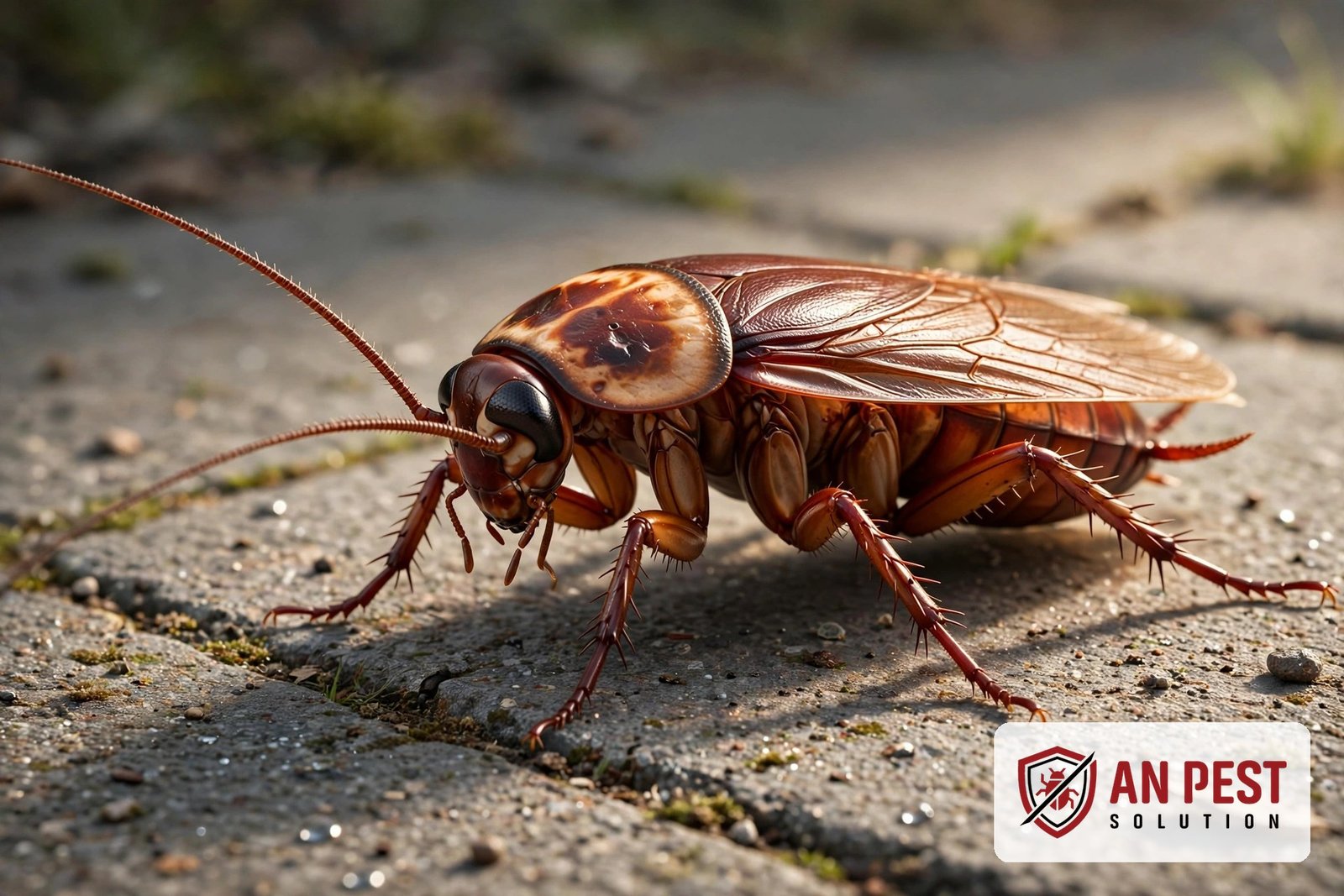
The American cockroach (Periplaneta americana) is the giant most UAE residents recognize — 35–40mm long, reddish-brown, and capable of short gliding flights that never fail to cause panic. Despite the name, it is common across the Middle East.
Unlike its German cousin, the American cockroach is primarily an outdoor and sewer species. It breeds in sewers, septic tanks, drains, manholes and damp basements, then wanders indoors through floor drains, pipe chases and under doors — especially at night. Finding one in your bathroom does not mean your kitchen is infested; it often means a drain needs attention.
American cockroaches are slower breeders — egg cases hold around 16 eggs — but they are tough, long-lived and excellent climbers. They are also a sign of building-level issues: if several flats report them, the source is usually the drainage system or garbage rooms, not any single kitchen.
Do not confuse American cockroaches with the Oriental cockroach, another large dark species found in the UAE. Oriental cockroaches are darker — almost black — and prefer cooler, damper spots. The treatment principles are similar to American cockroaches, but accurate identification still matters for product choice.
German vs American cockroaches: side-by-side differences
- Size: German 13–16mm vs American 35–40mm.
- Color: German light brown with two dark stripes vs American reddish-brown and uniform.
- Wings: German rarely flies vs American glides short distances.
- Habitat: German indoors in kitchens and appliances vs American in sewers, drains and outdoors.
- How they enter: German hitchhikes in bags, boxes and groceries vs American comes up through drains and under doors.
- Breeding speed: German very fast (30–40 eggs per case) vs American slower (around 16 per case).
- Droppings: German like ground pepper vs American larger, blunt-ended pellets.
The quickest field test: size and location. A small, fast, light-brown roach scattering when you open a kitchen cupboard is almost certainly German. A large reddish-brown one emerging from a bathroom drain at night is almost certainly American.
German vs American cockroaches: why the type matters for treatment
Treatment fails when it targets the wrong species. German cockroaches demand indoor precision: gel baits placed in harborage, insect growth regulators to break the breeding cycle, and meticulous attention to kitchens and appliances. Spraying alone scatters them deeper into hiding.
American cockroaches demand exclusion and source control: sealing drains with proper covers, treating manholes and garbage areas, door sweeps, and residual barriers at entry points. Baiting the kitchen will not help if the colony lives in the building’s sewer line.
A professional inspection identifies the species first — that is why reputable companies start with a survey rather than a spray. For cockroach control in Dubai, the treatment plan, the products and even the follow-up schedule all depend on which cockroach you have. Get the identification right, and the treatment is straightforward; get it wrong, and you will be treating the wrong place with the wrong product.
So the next time you face the German vs American cockroaches question, take a second before you reach for the spray. Note its size, its color and where you found it. That thirty-second observation tells a professional everything needed to choose the right treatment — and it is the difference between a problem solved and a problem postponed.
If you are unsure which species you have, snap a clear photo next to a coin for scale and send it to a pest control professional. Most reputable Dubai companies will identify it from a photo and advise whether you need an indoor baiting program, drain and perimeter work, or both — before anyone picks up a sprayer.